

Published September 25, 2026
Does Home Staging Really Make a Difference?

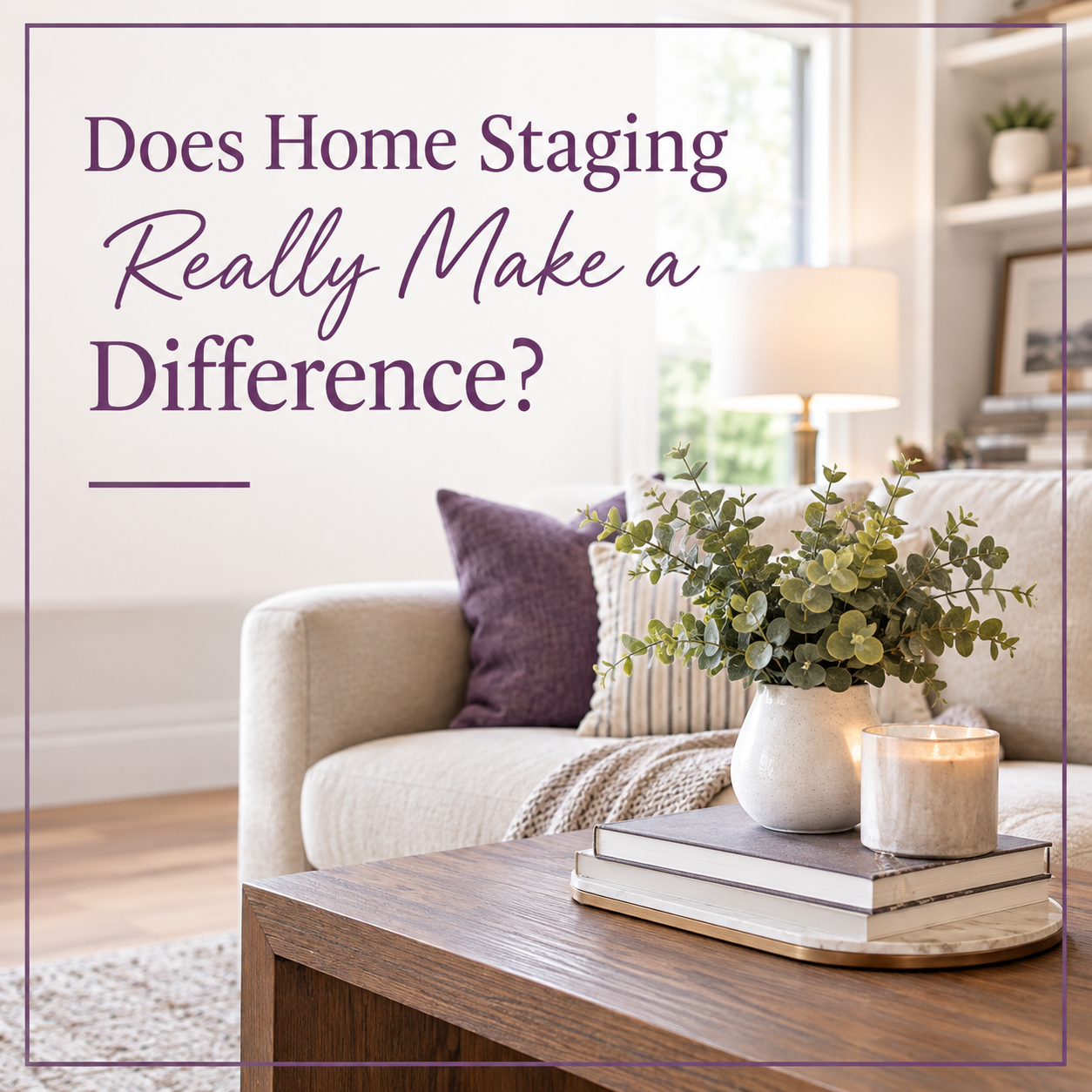
Why Staging Isn't Optional Anymore: The Real Numbers Behind a Home That Sells
If you've ever wondered whether staging a home before it hits the market is worth the time, effort, or cost — the data has a clear answer: yes, and increasingly so. Here's what the research shows, and how you can apply it to your own sale:
Buyers Decide With Their Eyes First
According to the National Association of Realtors' 2025 Profile of Home Staging, 48% of agents said home buyers now expect homes to look like they've been staged on TV shows, and 58% said buyers were disappointed when homes didn't measure up to that portrayal. Expectations have shifted — buyers aren't just touring a house, they're evaluating a lifestyle.
That's exactly what staging delivers. 83% of homebuyers' agents said staging made it easier for a buyer to envision the property as their own future home, and 60% of agents said staging affected some buyers' perception, while 26% said it affected most buyers' view of the home. Only a small minority — 12% — said staging made no difference at all (NAR, 2025 Profile of Home Staging).
Room by room, some spaces matter more than others. For buyers, the living room was considered the most important space to stage (37%), followed by the primary bedroom (34%) and the kitchen (23%). If your budget or timeline is limited, this is exactly where to start.
The Financial Case Is Getting Stronger, Not Weaker
This is the part sellers really want to know: does staging translate into dollars?
NAR's 2025 data found that nearly 3 in 10 agents (29%) reported staging led to a 1–10% increase in the dollar value offered, and almost half of sellers' agents (49%) said staging reduced the amount of time a home spent on the market. NAR deputy chief economist Jessica Lautz put it well: the typical homeowner lives in their house for about 10 years before selling, and in that time they can stop noticing things that turn off potential buyers — staging helps agents spotlight a home's best features so sellers can attract the most competitive offers (NAR newsroom, May 2025).
The Real Estate Staging Association (RESA), which tracks real, closed transactions rather than survey opinions, backs this up with even sharper numbers. In its Q1 2025 Home Staging Market Insights report — based on 84 actual home sales — RESA found: an average return on investment of 2,334%, an average of $56,000 over list price, an average staging investment of $3,588, and an average of just 12 days on market (Home Staging Newswire, Q1 2025 Report). Notably, even properties staged for under $1,000 still saw a 134% ROI — proof that staging doesn't have to mean a full-scale furniture overhaul to make a measurable difference.
RESA's broader research pool tells a similar story over time: a study of 13,000 staged homes found 85% sold between 5–23% over list price, and with a typical staging investment of just 1% of list price, 75% of sellers saw a 5–15% return (RESA Consumer's Guide, via RISMedia).
Time on Market Matters More Than People Realize
A home that lingers on the market doesn't just cost a seller in carrying costs — it can quietly shift negotiating leverage toward the buyer. RESA's 2024 survey data found that staged homes spent an average of just 31 days on the market, and in the U.S., professionally staged homes sold for an average of $69,669 more than their listing price (Home Staging Newswire).
What This Means for You as a Seller
Staging isn't about hiding a home's flaws — it's about presenting a property so a wide range of buyers can picture their own lives in it. A few takeaways, grounded in the data above:
- Prioritize the living room, primary bedroom, and kitchen if you're staging on a budget — these are the rooms buyers weigh most heavily.
- Even light staging pays off. RESA's data shows meaningful ROI even at investments under $1,000.
- A faster sale often means a stronger sale. Reduced time on market frequently correlates with fewer price reductions and better negotiating position.
A Fair Housing Reminder for Every Seller
One important note: the goal of staging is always to highlight a home's features — never to signal who should or shouldn't picture themselves living there. In line with the Fair Housing Act, staging and marketing choices should stay neutral and welcoming to all buyers regardless of race, color, religion, sex, national origin, familial status, or disability. That means presenting spaces in a way that's broadly appealing rather than tailored to any one type of family or lifestyle, and — if virtual staging software is used — clearly disclosing that the images are virtually staged so buyers aren't misled about the home's actual condition. Good staging highlights a space; it never excludes a buyer.
The Bottom Line
Across every major data source — NAR's survey of thousands of Realtors and RESA's tracking of actual closed sales — the story is the same: staged homes sell faster, sell for more, and give buyers an easier time picturing themselves at home. If you're getting ready to list, staging isn't a "nice to have." It's one of the highest-leverage investments you can make before putting a sign in the yard.
Thinking about listing your home?
The Mahoney Team would love to walk you through a staging plan tailored to your property and timeline.
"When you hire the Mahoney Team, you hire family."

Terry Mahoney
Rainmaker | The Mahoney Team LLC | Keller Williams Realty Gulf Coast
or another way