

Published October 9, 2026
After the Storm: What to Do Once Isaias Passes

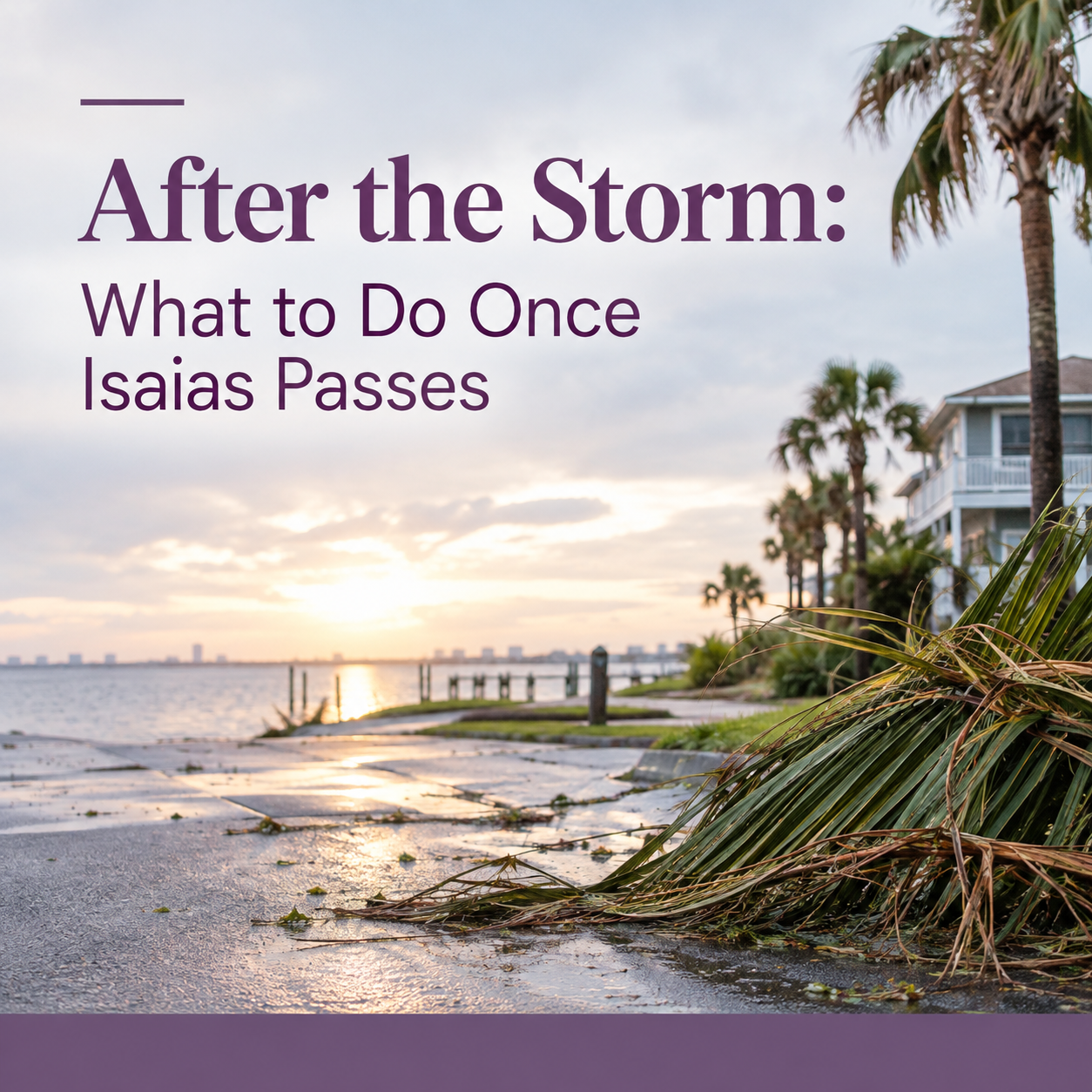
Pensacola, we've done this before, and we'll get through it together.
As Hurricane Isaias moves through the Gulf Coast, our team is thinking of every neighbor, client, and friend across Pensacola and Northwest Florida. If you're reading this, we hope you're safe and settled somewhere secure. Bookmark this post and come back to it when the winds die down. Here's what to do once the storm has passed.
1. Wait for the all-clear
The most dangerous moments can come after the wind dies down. Stay put until local officials say it's safe, and remember that the calm of an eye can fool you. Once it's safe to go outside, move slowly and watch where you step.
2. Treat every downed line as live
Stay far away from downed power lines, and anything they might be touching, including puddles and fences. Report them to your utility company or 911. Never drive through standing water, either. Just a foot of moving water can carry off a vehicle, and floodwater can hide washed-out roads and debris.
3. Be careful with generators and grills
Run generators outdoors only, well away from windows, doors, and garages. Carbon monoxide is odorless, and poisoning after storms is a real and preventable danger. Never use a grill or camp stove indoors. If you smell gas, leave the house and call from a safe distance.
4. Check your family and your neighbors
Check in on elderly neighbors, anyone who lives alone, and families with young children or medical needs. A knock on the door or a quick text can mean the world after a storm. In Pensacola, we take care of our own.
5. Document everything before you clean up
This step makes insurance claims go much more smoothly:
- Take photos and video of all damage, inside and out, before moving or tossing anything
- Capture wide shots and close-ups, and include any water lines on walls
- Keep a list of damaged belongings, with approximate values if you can
- Save receipts for temporary repairs, hotel stays, and supplies
6. Call your insurance company early
Contact your insurer as soon as you can safely do so, and ask what your policy requires. Two things worth knowing:
- Flood damage is typically covered separately from standard homeowners insurance, so check whether you have a flood policy.
- Hurricane deductibles are often different from your regular deductible, and claim deadlines apply, so read your policy or ask your agent directly.
Make only the temporary repairs needed to prevent further damage, like tarping a damaged roof, and keep your receipts. Hold off on permanent repairs until your insurer has weighed in.
7. Watch out for storm chasers and scams
Unfortunately, disasters attract bad actors. Before you hire anyone:
- Verify that contractors are properly licensed and insured
- Get written estimates and ask for references
- Never pay the full amount upfront
- Be wary of anyone going door to door who pressures you to sign right away
If you're unsure, ask us. We work with trusted, local vendors and are happy to point you toward people we know and trust.
8. Mind your food, water, and health
If the power's been out, toss perishable food that's been above safe temperatures for too long. When in doubt, throw it out. Follow local guidance on whether your tap water is safe to drink, and use bottled or boiled water if told to. Wear sturdy shoes and gloves during cleanup.
9. Tackle water damage and mold quickly
Mold can begin growing within a day or two in damp conditions. Remove standing water as soon as it's safe, run fans and dehumidifiers, and pull out soaked carpet and drywall as advised by your insurer or a qualified professional. If you suspect structural, electrical, or gas damage, have a licensed pro inspect before you turn anything back on.
10. Be patient with yourself
Recovery is a marathon. It's okay to feel overwhelmed, tired, or emotional. Accept help, take breaks, and lean on your community. Local relief organizations, churches, and neighbors are often the fastest source of help in the first days.
A note for homeowners, buyers, and sellers
If your home took damage, or you're wondering how the storm might affect a pending sale, a purchase, or your plans to list, please don't hesitate to reach out. We can talk through your options, connect you with reliable inspectors, contractors, and other local professionals, and help you figure out your next steps. No pressure, no agenda, just here to help.
When you hire the Mahoney Team, you hire family. And right now, our family is thinking of yours.
Stay safe, Pensacola.
Reach out if you need anything: (850) 285-0341, info@mahoneyreteam.com
Terry Mahoney
Rainmaker | The Mahoney Team LLC | Keller Williams Realty Gulf Coast
or another way